





The House Always Wins? Why Smart Bettors Still Play
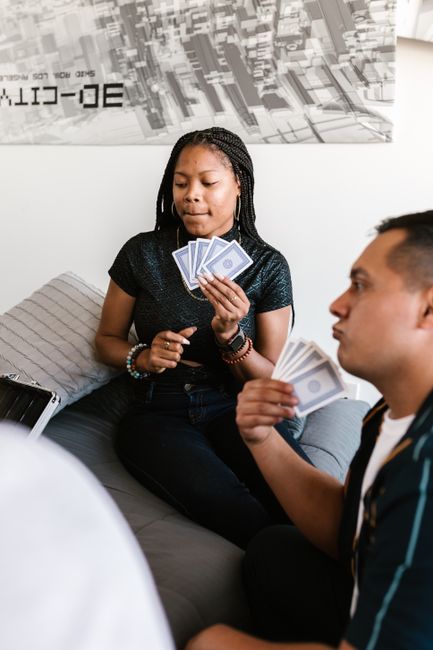
Every gambler has heard the old line: the house always wins. It is technically true, and it is also completely beside the point. Casinos, sportsbooks, and poker rooms do not make money by fleecing every single customer on every single bet. They make money through volume, math, and the quiet compounding of a small percentage advantage. Understanding how that advantage actually works is the difference between a player who lasts and one who torches their bankroll in a weekend. This is not a lecture on quitting gambling. It is a practical look at how iGaming really operates, so you can play with your eyes open.
The Margin Is Small, and That Is the Whole Business
Take a standard American roulette wheel. It has 38 pockets: numbers 1 through 36, plus 0 and 00. If you bet on red, you have 18 winning pockets out of 38. The payout is even money, so a winning $10 bet returns $20. But the true odds of hitting red are 18 in 38, or about 47.4%. Multiply the probability of winning by the payout and subtract the probability of losing, and you get a house edge of about 5.26%. That number is the casino's entire meal ticket. It does not need you to lose tonight. It just needs you to keep playing, because over thousands of spins that 5.26% grinds out a steady profit.
European roulette, with a single zero, cuts that edge to 2.7%. The rules barely differ, but the long-term cost to a player is nearly half. This is the first lesson of iGaming: the game you choose matters more than how you play it. A slot machine with a 4% hold will drain a bankroll far faster than blackjack played with basic strategy at 0.5%. Two players can wager the same amount on the same night and end up in wildly different places.
Slots: RTP, Volatility, and the Numbers Behind the Reels
Modern video slots are mostly built around return-to-player percentages, usually between 92% and 97%. An RTP of 96% means that for every $100 wagered, the machine is designed to pay back $96 over millions of spins. The remaining 4% is the house's cut. Here is where players get confused: RTP is not a guarantee for a single session. It is a long-run average that only reveals itself across an enormous sample size.
Volatility is the other half of the equation, and it is arguably more important for your experience. A low-volatility slot pays small amounts frequently, stretching your bankroll but rarely producing a life-changing hit. A high-volatility slot can go 200 spins without a payout, then drop a 5,000x win. Neither is better. They suit different players and different bankrolls.
- Low volatility: frequent small wins, good for long sessions with a modest budget.
- Medium volatility: a balance, often the default for popular titles.
- High volatility: rare but massive payouts, high risk of busting quickly.
A practical tip: check the RTP before you spin. Some providers publish it in the game's info panel, and jurisdictions like the UK require operators to display it. A 94% slot is not a scam, but it is a different beast from a 96.5% one, and over a few thousand spins that gap adds up to real money.
Sports Betting: Where the Edge Gets Squeezed
Sportsbooks operate on a concept called the vig, or juice. On a standard point spread, you might see -110 on both sides. That means you must wager $110 to win $100. The true probability of each side is roughly 50%, but the payout implies something closer to 52.4%. The book keeps the gap. On a two-way market with both sides at -110, the house edge is about 4.55%. Same principle as roulette, different wrapper. For up-to-date information, visit สล็อต.
Where this gets interesting is line shopping. If one book offers -105 on the Chiefs and another offers -115, the sharp bettor takes the -105. Over a season, saving those few cents on every bet is the difference between a losing and a break-even record. Professional bettors do not win by picking winners more often than everyone else. They win by finding mispriced lines and exploiting them systematically. The 2018 Supreme Court decision that opened US sports betting to individual states created a fragmented market with dozens of different lines, and that fragmentation is a gift to anyone willing to compare prices.
Poker: The Only Game Where You Beat People, Not the House
Poker is the great exception in the casino ecosystem. In cash games, the house takes a rake, typically 5% of the pot up to a cap like $3 or $5. In tournaments, you pay a buy-in plus a fee, often around 10%. Beyond that, your profit comes entirely from other players. This means poker is beatable in a way that roulette never is, but only if you are better than the people at your table.
That sounds obvious, but it has a cruel implication. If you sit at a table full of strong regulars, you are the mark. Table selection is not a dirty word; it is the single most underrated skill in poker. A mediocre player at a soft table makes more than a great player stuck against sharks.
- Track your results honestly, hand by hand if necessary.
- Avoid ego games against players you know are better.
- Move down in stakes when you hit a downswing larger than 20 buy-ins.
- Study ranges and equity rather than relying on gut feelings.
Online poker also runs faster than live poker, which magnifies both your edge and your leaks. More hands per hour means variance cuts both ways. A good win rate of 5 big blinds per 100 hands is sustainable, but it will still produce brutal stretches where nothing connects.
Bankroll Management Is the Real Skill
You can be the best handicapper or the sharpest slot player in the room and still go broke if you bet too big for your roll. The math is unforgiving. A professional sports bettor commonly risks 1% to 2% of their bankroll per wager. A poker player wants at least 20 buy-ins for a cash game and 50 to 100 for tournaments, because variance is a genuine force, not an excuse for losing.
The same logic applies to slots. If you deposit $100 and spin at $5 per spin, you are looking at roughly 20 spins before the reels have eaten you alive, even on a 96% RTP machine. Drop to $0.50 per spin and suddenly you have 200 spins, which gives the RTP a realistic chance of showing itself. Bet sizing, not luck, determines how long you stay in the game.
The Bottom Line
The house edge is real, but it is not a death sentence. It is a fee for entertainment, and like any fee, it should be understood before you pay it. Choose games with favorable math, shop for the best lines, manage your bankroll like it actually matters, and treat poker as the merit-based outlier it is. The people who lose consistently are almost never unlucky. They are playing the wrong games, at the wrong stakes, with money they cannot afford to lose. The people who last are the ones who treat gambling as a calculated cost rather than a guaranteed payday. Pick your side deliberately, because the math will not do it for you.







The fastest way to become a lifelong reader is to finish something great this week, and these five slim classics make that possible.
Jane Austen's most famous novel is not a dusty romance but a sharp, funny machine for observing people, and it remains startlingly modern.
Old books can feel like locked rooms, but a few simple strategies turn intimidation into curiosity and confusion into momentum.
Mary Shelley's novel is nothing like the movies, and its real subject, the ethics of creation and abandonment, is more urgent than ever.
A great first sentence is a doorway, and these five have been pulling readers into unforgettable books for generations.